To prevent your own PCB files from being copied or to increase the workload of their PCB reverse engineers, there are usually 12 ways (not up-to-date, but still useful) to reduce the probability of files being copied to some extent:
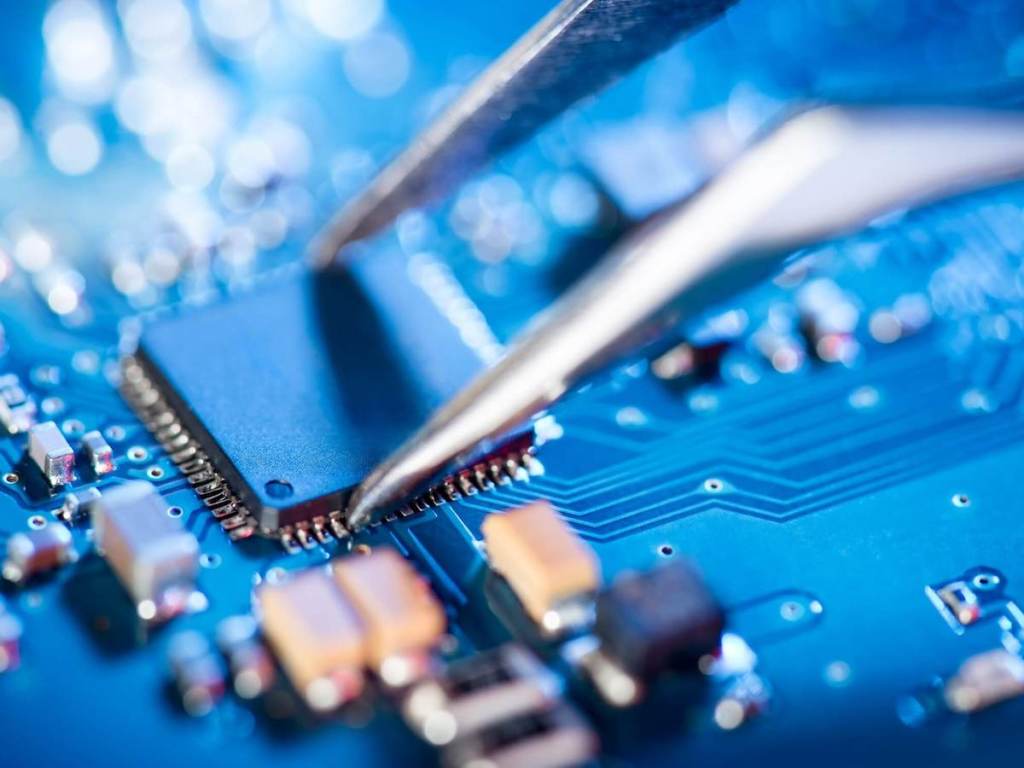
1. Grind the chips with fine sand paper. For a chip with a side door, the reverse engineer can easily figure out the real chip by guessing the general function and checking which pins are grounded and connected to the power supply.
2. Sealing, which covers the PCB and the electronic components on it with a stone-like gel (such as bonded steel or ceramic). It can also be deliberately screwed together with five or six flying wires (best wrapped in fine lacquer). The process of disassembling the PCB copy is bound to break the flight line. And don’t know how to connect. It should be noted that the glue should not be corrosive and the heat in the enclosed area is not too large.
3. Using special cryptographic chips, such as AT88SC153 of ATMEL, is a few dollars. As long as the software can not be disassembled, PCB copy can not be copied even if all the signals are intercepted by logic analyzer.
4. Use non-breakable chips, such as EPM7128 of EPLD or CPLD of ACTEL, but with high cost (more than 100 yuan), they are not suitable for small products.
5. With MASK IC, MASK IC is generally much more difficult to crack than programmable chips, which requires a lot of batches. MASK is not only to MCU, but also to ROM, FPA and other special chips.
6. With bare sheets, PCB copy does not see the model and does not know the connection. But the function of the chip is not too easy to guess. It’s better to put something else in the black gel, such as a small IC, a resistor, etc.
7. Connecting more than 60 ohms of resistance in series on a signal line with a small current (to keep the on/off of the multimeter quiet) will cause a lot of trouble for PCB copy personnel when measuring the connection relationship with the multimeter.
8. Use more small components without words (or only some code numbers) to participate in signal processing. For example, small patch capacitance, TO-XX bipolar, triode, three to six-foot microchip, etc., it is a bit of a hassle to find out what it really is.
9. Crossing some addresses and data lines (except RAM, which needs to be crossed in the software) so that those PCB copyers cannot be lazy when measuring connection relationships.
10. PCB uses buried and blind hole technology to hide the through hole in the board. This method is expensive and only applicable to high-end products.
11. Use other special accessories, such as custom LCD screens, custom transformers, SIM cards, encrypted disks, etc.
12. Apply for a patent. Protect with intellectual property rights.
 Image Bloggers
Leave a comment