Diamonds are commonly evaluated based on the 4 Cs: carat, cut, clarity, and color. Among these, carat weight is one of the most noticeable factors because it directly relates to the diamond’s size. However, a higher carat weight doesn’t always mean the diamond will look significantly larger—or better. It does, however, have a clear effect on pricing.
This article explains how carat weight influences a diamond’s visual size and cost, helping you understand what you are paying for and what to expect.
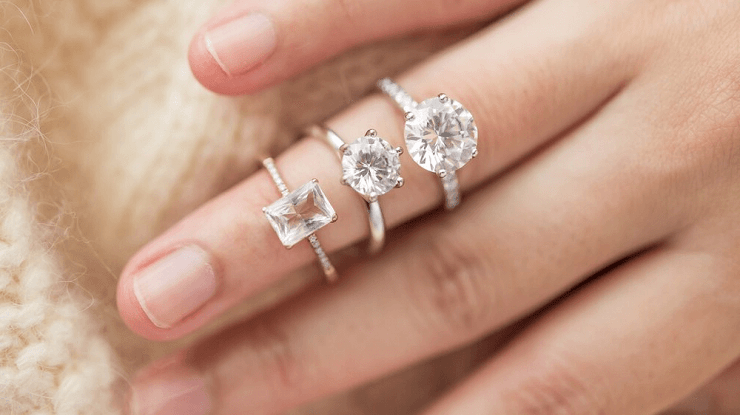
What Is Carat Weight?
Carat is the measurement of a diamond’s weight. One carat equals 200 milligrams. This weight is different from the size or diameter of a diamond, though people often associate the two.
For example, two diamonds with the same carat weight can look different in size depending on their shape and how they are cut. A shallow-cut diamond may appear larger from the top, while a deep-cut one may look smaller even if they weigh the same.
How Carat Weight Affects Appearance
People usually expect a bigger diamond to stand out more. While this can be true, the difference is not always dramatic. For instance, the jump from a 1.5-carat to a 2-carat diamond may not be visually striking unless you closely compare both side by side.
Here are some key points on how carat weight relates to appearance:
- Face-up Size: This is the visible part of the diamond when viewed from the top. A higher carat weight may increase the face-up size, but only to a certain extent.
- Diamond Cut: A well-cut diamond can reflect more light, making it look brighter and slightly larger than its actual weight suggests.
- Finger Size and Ring Design: The setting and the finger size can change how large a diamond looks. A 2-carat diamond may look more prominent on a thinner finger and with a minimalist setting.
So, while carat weight contributes to size, it’s not the only factor that affects how large a diamond appears once worn.
How Carat Weight Affects Cost
Carat weight has a direct impact on price. As the weight increases, the price per carat also increases. This is not a straight-line increase. Instead, it rises sharply at specific points. Diamonds that hit full carat marks—like 1.00, 1.50, 2.00—tend to cost significantly more than diamonds just below those marks.
Let’s take the 2 Carat Diamond Price as an example. A 1.90-carat diamond and a 2.00-carat diamond may look nearly the same in size, but the 2-carat one will cost more, sometimes by thousands of dollars. This is because hitting the 2-carat mark makes it more desirable in the market, pushing up the price.
The same pattern continues with higher weights. For example, 3.00-carat diamonds can cost substantially more than 2.90-carat stones.
Why This Matters for Buyers
If you’re buying a diamond based on appearance rather than just the number on paper, you might consider getting a stone just under a popular carat mark. For example, a 1.90-carat or 1.95-carat diamond may give you a nearly identical look to a 2-carat stone at a much better price.
Also, keep in mind the other Cs. A slightly smaller diamond with excellent cut and clarity can look better than a larger one that lacks sparkle or has visible flaws.
Final Thoughts
Carat weight certainly affects both the appearance and the cost of a diamond. But it’s not the only element that defines how a diamond will look once it’s set into a ring. Cut, shape, and setting play major roles. Spending time comparing different options based on cut, shape, and overall brilliance can help you find a diamond that looks stunning without overspending.
 Image Bloggers
Leave a comment